
Thank you everyone for helping us have another successful PAHMT Conference this year!
Please note the date has been posted for next year's conference:
August 11–14, 2027
Blair County Convention Center
See you all again soon!
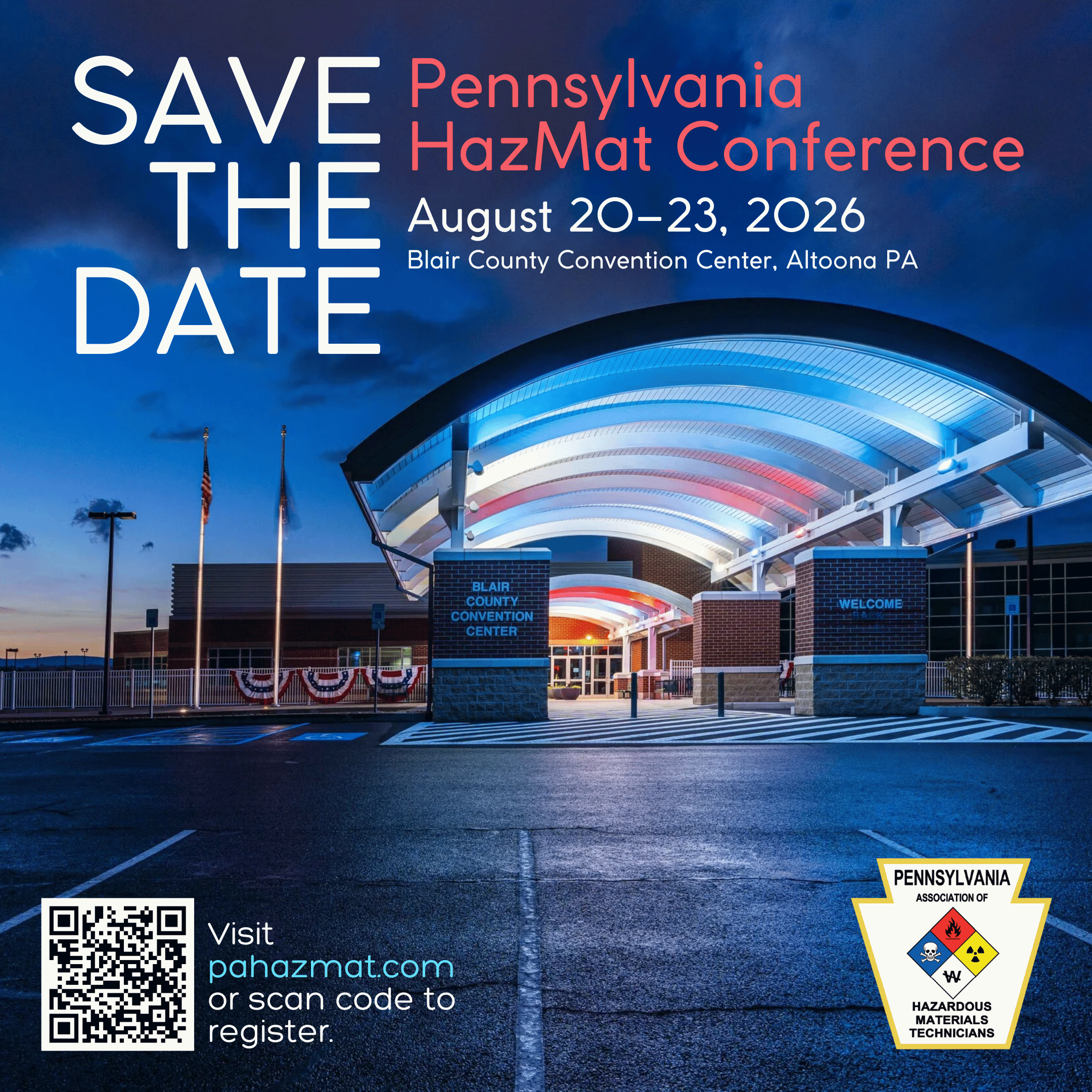
Join us for the
34th Annual PA HazMat
Training & Education Conference
August 20–23, 2026
Blair County Convention Center
Conference
Attendees
Register for the conference by clicking the link below. We cannot wait to see you all at the conference!
Instructors
& Presenters
We are always looking for instructors to share their wealth of knowledge with conference attendees. Please let us know you're interested. Contact us below!
Vendors
& Sponsors
PA Hazmat is actively looking for vendors and sponsors to continue to grow our event. Please click below for opportunities!
New Venue in 2026!
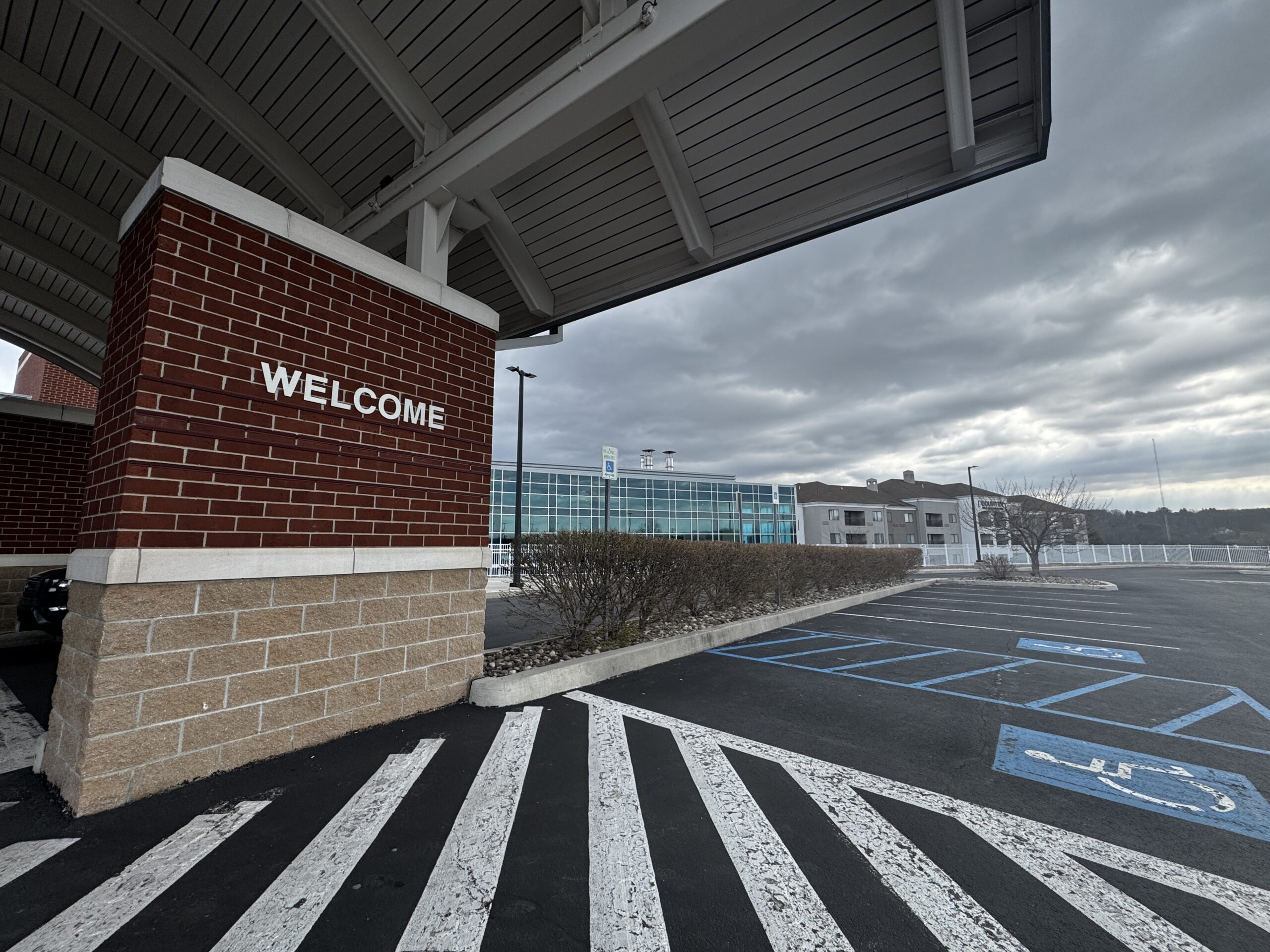
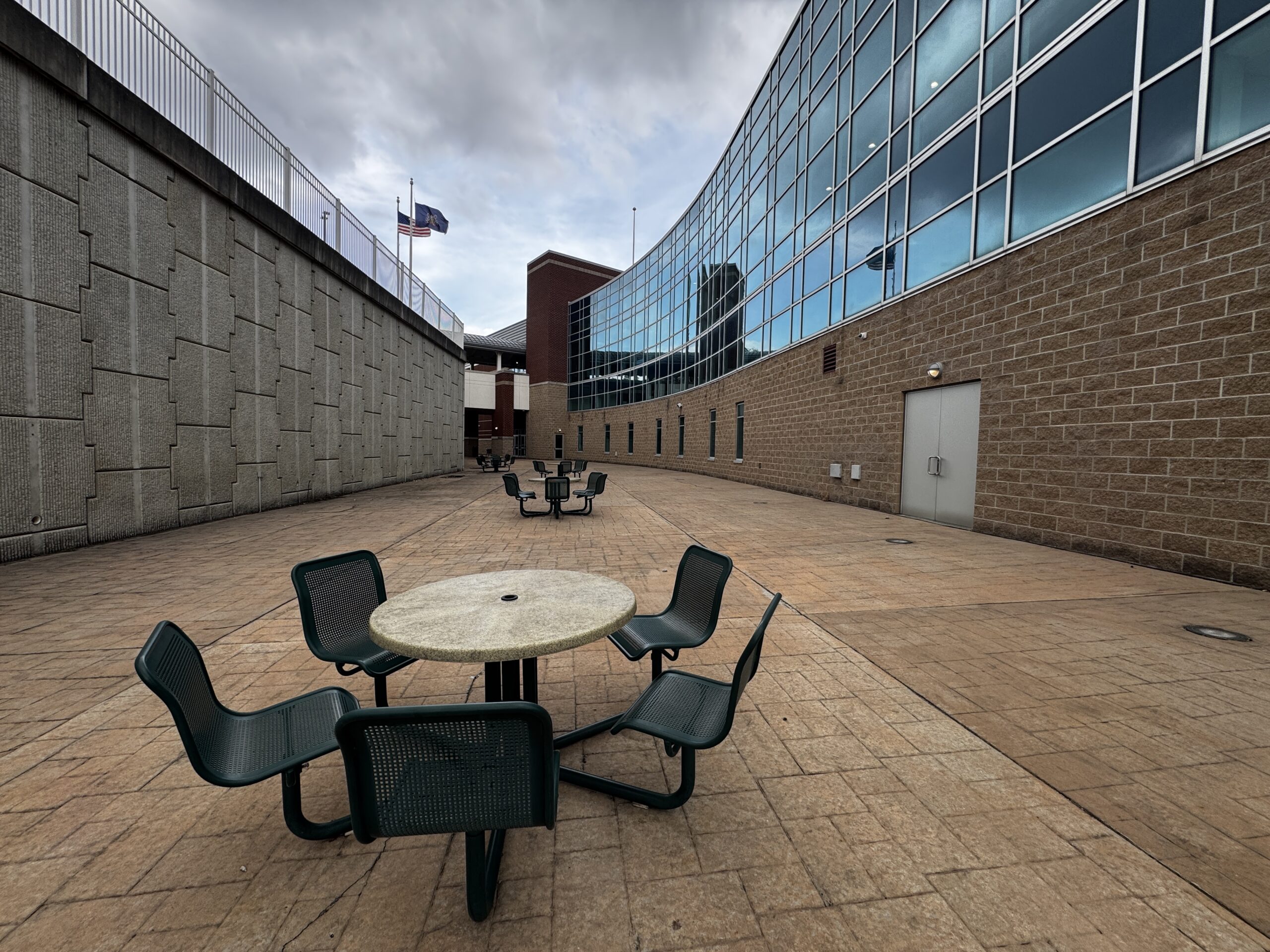
Find us at the Blair County Convention Center this year.
Located in Altoona, PA – home of the Altoona Pizza (don't ask) – we will dive into new territory as our friends at the convention center welcome us and all PA HazMat has in store.
See links below for hotel information for the conference, local restaurants and other things to do while in town.

Get to know the folks at the conference.
Select the buttons below for more information about our instructors, sponsors & vendors for this year's conference.
Information is also available on the Engage mobile app from your phone.

Engage Mobile App by Regfox
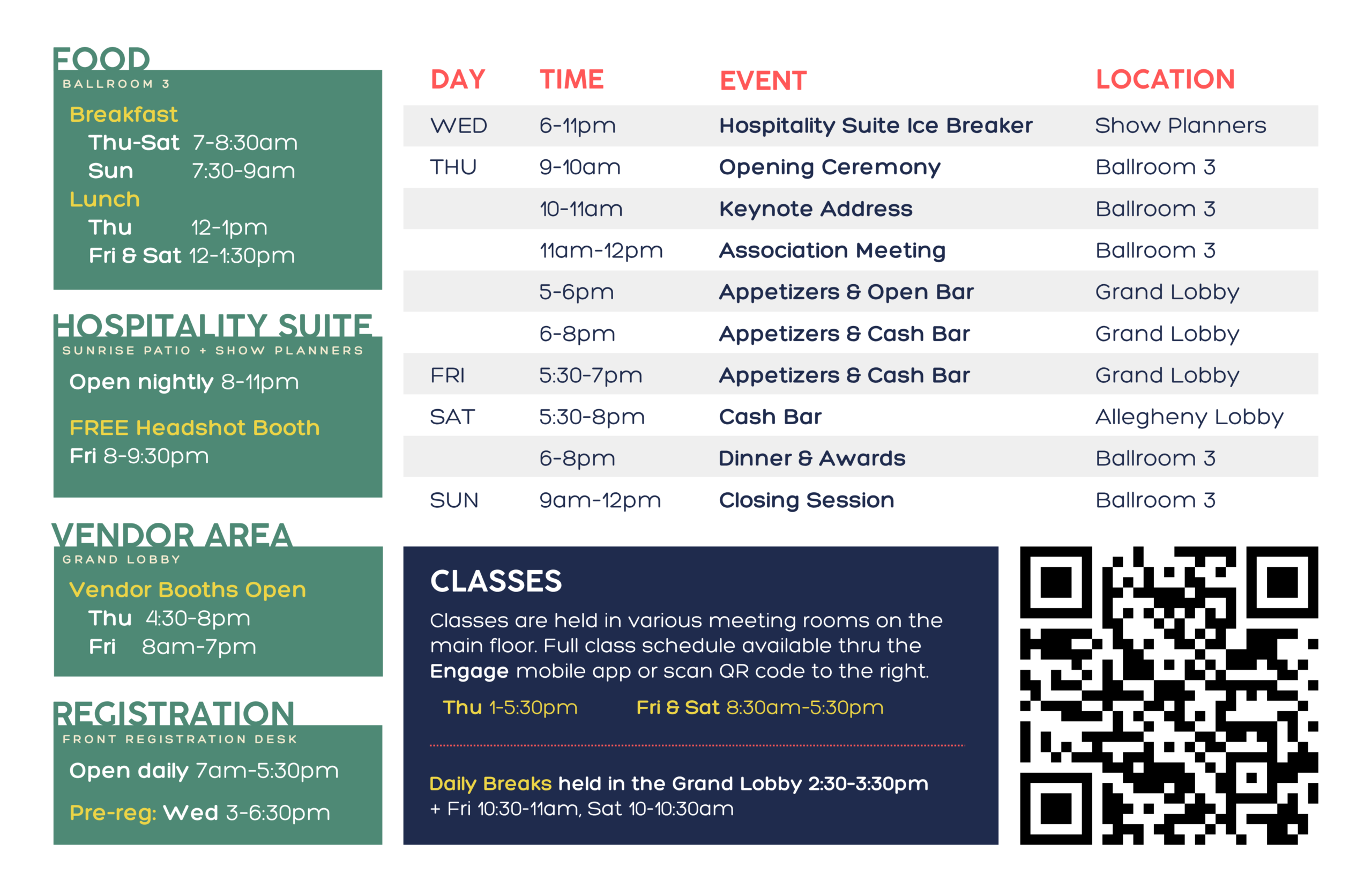
No class sign ups this year! All of the classes will simply be listed in the Engage mobile application by RegFox.
You will be able to build your own schedule from your phone and can add or remove sessions from your own schedule. The Engage application will be updated if any class locations or times change, so please be sure to check each day before your saved classes.
A link was sent out to each conference attendee when they register - if you did not receive this, please don't hesitate to reach out to us to make sure you can access the app during the conference.
Agenda
2026 Class Schedule
Thursday Classes
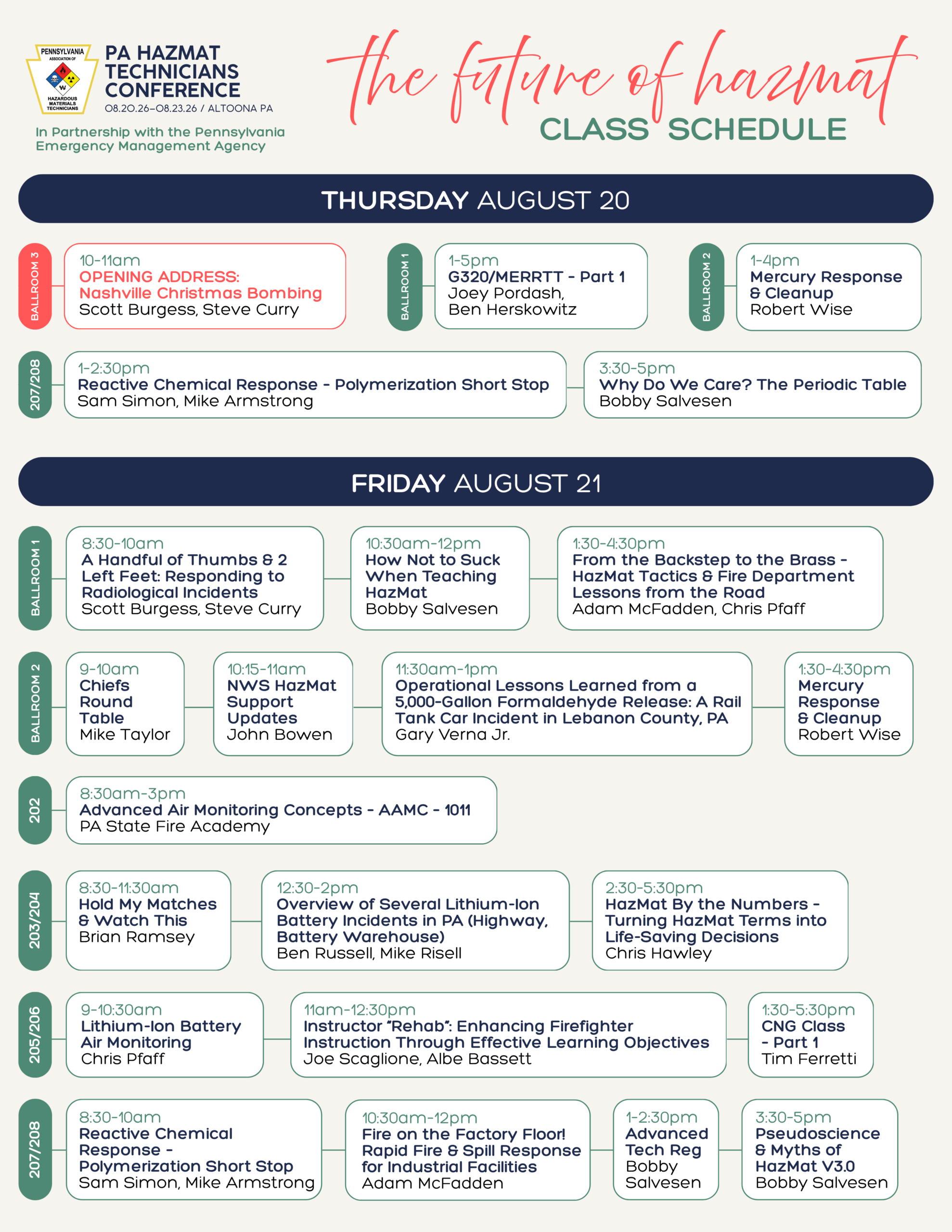
Select the class name below for dropdown showing more information including instructor/presenter name, location and in-depth class description.
Keynote Address – Nashville Christmas Bombing
Location: Ballroom 3
Time: 10–11am
Presenter: Scott Burgess, Steve Curry
On Christmas Day 2020, a vehicle borne improvised explosive device (VBIED) was detonated in downtown Nashville. The explosion destroyed 12 buildings that either collapsed or had to be demolished and damaged 30 others. Scott Burgess was the initial incident commander and later became the operations section chief. In this presentation, Scott will cover the first 24 hours of response by the NFD. He will share the lessons learned, what went right, and what went wrong. More importantly, Scott will explain how previously developed partnerships with local, state, and federal agencies were the linchpin to a successful response and multi-week unified command.
G320/MERRTT – Part 1
Location: Ballroom 1
Time: 1–5pm
Presenter: Joey Pordash
The purpose of this course is to provide the coursework to help qualify participants to serve as a Radiological Officer (RO). This course meets the Operations Level Competency for first responders and hazardous materials teams who may encounter or be called to manage radiological incidents. This course addresses Nuclear Power Plant, Transportation, Nuclear Weapons, WMD and Hazardous Material hazards. Participants will be able to support planning, emergency response, recovery activities, evaluation, NIMS/ICS applicability and exercising a radiological protection system (RPS) in preparation for a radiological incident. This course will include Pennsylvania specific information and requirements. It provides participants with an understanding of the roles and responsibilities of the Radiological Officer including administrative, equipment, team and advisory responsibilities. The course describes the framework within which the radiological response team functions, and provides fundamental knowledge of radiation and its affects, while building on the participant’s previous training and experience and including the proper response and pre-recovery procedures for a radiological incident.
Mercury Response & Cleanup
Location: Ballroom 2
Time: 1–4pm
Presenter: Robert Wise
Organization: EPA
The class covers all aspects of Mercury Response. It starts with a description of the types of Mercury encountered, its chemistry and forms. Mercury exposure symptoms and safety issues including PPE. Air monitoring for Mercury. Assessment & Cleanup techniques for various scenarios including residential, schools, commercial and outside. Action levels for occupational exposure and cleanup. Community relations issues associated with these types of sites. The class follows the EPA Mercury Response Guidebook.
Reactive Chemical Response – Polymerization Short Stop
Location: Room 207/208
Time: 1–2:30pm
Presenters: Sam Simon, Mike Armstrong
Organization: DOW
Attendees will learn about reactive Monomer chemicals used in global manufacturing of polymer coating and plastic products.
- Storage and Shipping of Monomer
- Identify Causes of Polymerization
- Preplans / Emergency Plans
- Risk Assessments / Site Safety Plans
- Emergency Response Considerations
- Reactive Chemical Migration Techniques
- Environmental Considerations
Why Do We Care? The Periodic Table
Location: Room 207/208
Time: 3:30–5pm
Presenter: Bobby Salvesen
Organization: The HazMat Guys
In this 90-minute presentation, The Haz Mat Guys will delve into the essential insights derived from the Periodic Table, connecting them to our hazardous materials responses. We'll explore the similarities and differences among elements, explain what they are, how they work, and why they are vital in our world.
Friday Classes
Select the class name below for dropdown showing more information including instructor/presenter name, location and in-depth class description.
A Handful of Thumbs & Two Left Feet: Responding to Radiological Incidents
Location: Ballroom 1
Time: 8:30–10am
Presenter: Scott Burgess, Steve Curry
This presentation will explain the basics of radiation, the transportation of radiological materials, and the various technologies for detecting and measuring radiation. We will look at the roles of a hazardous materials team on a radiological incident. Additionally, PPE selection and the preferred methods of decontamination will be discussed. The presentation will conclude with 3 response case studies and an open forum discussion.
How Not to Suck When Teaching HazMat
Location: Ballroom 1
Time: 10:30am–12pm
Presenter: Bobby Salvesen
Organization: The HazMat Guys
We’ve all endured classes where the instructor was more toxic than the chemicals being discussed - what we call “Acute Toxic Instructor Syndrome.” In this session, we’ll explore methods to engage students, ensuring they stay attentive and retain key points. This class will revolutionize your teaching approach, transform student learning, and elevate hazmat training standards.
From the Backstep to the Brass - HazMat Tactics & Fire Department Lessons from the Road
Location: Ballroom 1
Time: 1:30–4:30pm
Presenter: Adam McFadden
Organization: Firehouse Training
This engaging session merges real-world frontline tactics with command-level insights, offering attendees an integrated look at hazardous materials response during highway, industrial, and rail-based incidents. With a focus on hazardous materials mitigation, incident commander and boots on the ground firefighter fundamentals along with fire and spill mitigation, this session equips hazmat responders with a common language and response framework with tactics, strategies and a focused gameplan.
Chiefs Round Table
Location: Ballroom 2
Time: 9–10am
Organization: Mike Taylor
This is a discussion-based meeting to discuss issues effecting HazMat Teams and HazMat Response in PA.
This session is for Team Chiefs and we ask that each team send no more that 2 representatives per team. If you have any items you would like have on the agenda, please let Mike Taylor know at mrtaylor@cumberlandcountypa.gov.
National Weather Service (NWS) HazMat Support Updates
Location: Ballroom 2
Time: 10:15–11am
Presenter: John Bowen
Organization: National Weather Service
National Weather Service provides meteorological and hydrological support for non-weather emergencies to official emergency services personnel. The information on this page is provided as a quick reference. NWS staff are available 24 hours a day to provide specific information and support for non-weather emergencies, such as hazardous materials spills and releases. This support can include:
- Provision and interpretation of current and forecast conditions
- Trajectory/dispersion modeling
- Additional data collection such as weather balloon launches
- On-site support for additional meteorological interpretation and data collection
Operational Lessons Learned from a 5,000–Gal Formaldehyde Release: A Rail Tank Car Incident in Lebanon County, PA
Location: Ballroom 2
Time: 11:30am–1pm
Presenter: Gary Verna Jr.
This session is designed for HazMat technicians, team leaders, incident commanders, and environmental emergency specialists seeking a detailed operational case study involving a high-risk railcar chemical release.
- Initial Size-up and Hazard Assessment
- PPE Selection and Entry Operations
- PPE Selection and Entry Operations
- Leak Identification and Railcar Considerations
- Environmental and Stormwater Impacts
- Contractor Coordination Challenges
- Command, Control and Multi-Agency Integration
- Tactical and Strategic Lessons Learned
Mercury Response & Cleanup
Location: Ballroom 2
Time: 1:30–4:30pm
Presenter: Robert Wise
Organization: EPA
The class covers all aspects of Mercury Response. It starts with a description of the types of Mercury encountered, its chemistry and forms. Mercury exposure symptoms and safety issues including PPE. Air monitoring for Mercury. Assessment & Cleanup techniques for various scenarios including residential, schools, commercial and outside. Action levels for occupational exposure and cleanup. Community relations issues associated with these types of sites. The class follows the EPA Mercury Response Guidebook.
Advanced Air Monitoring Concepts - AAMC - 1011
Location: Classroom 202
Time: 8:30am–3pm
Organization: PA State Fire Academy
This class is a detailed look at how the following detection, monitoring, and sampling devices work, and
- Describe the importance of working under HMT, Allied Professional, an Emergency Response plan, or a Standard Operating Procedure
- List Operations Mission-Specific detection, monitoring, and sampling responsibilities.
- Differentiate terms of measurement for oxygen, flammability, and toxicity.
- Detection, monitoring, and sampling basics.
- Summarize device selection considerations.
- Explain device calibration and maintenance.
- Describe the application, capabilities and limitations of detection, monitoring, and sampling equipment
- Discuss the procedures for reading, interpreting, documenting, and communicating results from detection, monitoring and sampling.
- Describe the procedures to decontaminate detection, monitoring, and sampling equipment IAW manufacturer’s recommendations and AHJ policies and procedures
- Devices that are covered are:
- 4 gas meter
- PID
- Colorimetric tubes
- pH and F paper
- Radiation detector/meter
- Dosimeter
- Temperature gun and/or Thermal Imaging Detector
Hold My Matches & Watch This
Location: Classroom 203/204
Time: 8:30–11:30am
Presenter: Brian Ramsey
Hold your matches and watch this! A highly interactive demonstration of the physical and chemical properties of flammable liquids and flammable gases! During these sessions, participants will witness flash point, flammable range, vapor pressure, boiling point, and vapor density. Additionally, we will be demonstrating the dynamic tendencies of flammable vapors when they encounter oxygen and ignition sources to create the "Boom" that tends to surprise us if we don't fully understand the hazards of our response situation!
Overview of Several Lithium-Ion Battery Incidents in PA (Highway, Battery Warehouse)
Location: Classroom 203/204
Time: 12:30–2pm
Presenter: Ben Russell, Mike Risell
Join Ben Russell and Chief Mike Rissel in a presentation and overview on a tractor trailer fire incident involving US-422 and a highway shutdown relating to lithium-ion batteries. This presentation will also include a description and discussion on other lithium-ion battery incidents.
HazMat By the Numbers – Turning HazMat Terms into Life-Saving Decisions
Location: Classroom 203/204
Time: 2:30–5:30pm
Presenter: Chris Hawley
Let’s be honest—most of us learned vapor pressure just well enough to pass a test. You wrote down the definition, maybe talked about it a little, and then moved on. But when you’re standing in front of a leaking drum at 2 AM, that definition doesn’t help much if you don’t know what it means for you.
This session takes vapor pressure—and a handful of other “fancy HazMat words”—and brings them back to where they belong: the street.
We’re going to talk about what these terms actually tell you about the behavior of a product, how they connect directly to your health and safety, and why they matter when you’re making real decisions. Not theory—application. The kind that drives what PPE you choose, how far you isolate, whether you evacuate, and how bad the situation is really going to get.
Because at the end of the day, this isn’t about memorizing definitions. It’s about understanding the science well enough to make good calls when things get messy.
If you’ve ever thought, “I know the term, but I don’t really use the term,” this session is for you.
Lithium-Ion Battery Air Monitoring
Location: Classroom 205/206
Time: 9–10:30am
Presenter: Chris Pfaff
Multiple studies have been conducted across the world and we now know what batteries release during thermal runaway. Between all this data and research, should your team go out and buy the latest and greatest shiny object? Maybe, maybe not. We will discuss this and ways to begin to quantify the hazards associated with Li-Ion events an the VOC level and limitations we have in the field. We will also briefly discuss some of the discussions that have been occurring for the fire code and community risk reduction in relation to fixed air monitoring capabilities and the community.
Instructor “Rehab”: Enhancing Firefighter Instruction Through Effective Learning Objectives
Location: Classroom 205/206
Time: 11am–12:30pm
Presenter: Joe Scaglione, Albe Bassett
Our training program is designed to rehabilitate fire service instructors by reinforcing the fundamental instructional concept of learning objectives and their practical applications. This program builds on the success of our four-hour scenario-based training session and is tailored to instructors of all experience levels.
Key elements of the "Rehab" approach include:
- Understanding Adult Learning Theories: Applying principles such as experiential learning and active engagement to fire service training.
- Utilizing Bloom’s Taxonomy: Identifying properly written learning objectives within the cognitive learning domain to create measurable, achievable training goals.
- Developing Practical Lesson Plans: Aligning instructional strategies with learning objectives to enhance knowledge retention and skill acquisition.
- Creating Effective Evaluations: Designing assessments that accurately measure student performance and training effectiveness.
- Scenario-Based Learning Application: Engaging students through active, scenario-driven exercises that reinforce learning outcomes.
CNG Class (Incident Scene Safety & Technical Considerations) – Part 1
Location: Classroom 205/206
Time: 1:30–5:30pm
Presenter: Tim Ferretti
We will go into the basics of what you need to know to approach and handle a CNG incident. Reviewing incidents, the fuel, cylinders, valves, safety devices, and configurations. The instructor will cover basic approach damage assessment, patient considerations and other aspects of a vehicle incident that must be taken into account when the vehicle is an AFV.
Reactive Chemical Response – Polymerization Short Stop
Location: Classroom 207/208
Time: 8:30–10am
Presenter: Sam Simon, Mike Armstrong
Organization: DOW
Attendees will learn about reactive Monomer chemicals used in global manufacturing of polymer coating and plastic products.
- Storage and Shipping of Monomer
- Identify Causes of Polymerization
- Preplans / Emergency Plans
- Risk Assessments / Site Safety Plans
- Emergency Response Considerations
- Reactive Chemical Migration Techniques
- Environmental Considerations
Fire on the Factory Floor! Rapid Fire & Spill Response for Industrial Facilities
Location: Classroom 207/208
Time: 10:30am–12pm
Presenter: Adam McFadden
Organization: Firehouse Training
In this industrial firefighting tactical response session, the student will increase their understanding of various firefighting and hazmat response tactics when dealing with active hazmat, fire and spill emergencies in commercial or manufacturing facilities.
This will include an overview of incident command strategies for factory or plant emergencies, industrial firefighting tactics and objectives for site-fires including water supply, large diameter hose-handling review, tactical ventilation, fire protection and suppression systems shutoffs, hazardous materials risk assessments, fixed facility spill response procedures, dealing with hazardous materials fires, and general preparedness for emergency incidents in the areas of oil and gas, industrial factory and commercial firefighting. This program will also cover joint-response coordination with local fire departments and emergency medical services, as well as local authorities and environmental companies.
Advanced Technical Reference
Location: Classroom 207/208
Time: 1–2:30pm
Presenter: Bobby Salvesen
Organization: The HazMat Guys
This accelerated session delivers the core principles of the Technical Reference Specialist role in hazardous materials incidents, synthesizing advanced chemistry, meter interpretation, container behavior prediction, and PPE decision-making into a high-impact format. Participants will engage in tactical thought exercises to apply field data, chemical profiles, and electronic tools for dynamic incident management. This class is built for those already certified at the technician level and looking to sharpen decision clarity under compressed timelines.
Pseudoscience & Myths of HazMat V3.0
Location: Classroom 207/208
Time: 3:30–5pm
Presenter: Bobby Salvesen
Organization: The HazMat Guys
This updated version of our popular myth-busting session explores persistent pseudoscience within the hazardous materials response world. Participants will dissect long-held beliefs, outdated "rules of thumb," and misunderstood safety protocols that continue to influence training and operations. Through historical analysis, scientific evaluation, and compelling demonstrations (live or video), we’ll expose the roots of misinformation and separate fact from folklore. Attendees will leave better equipped to challenge unsupported claims and elevate the credibility of their response decisions.
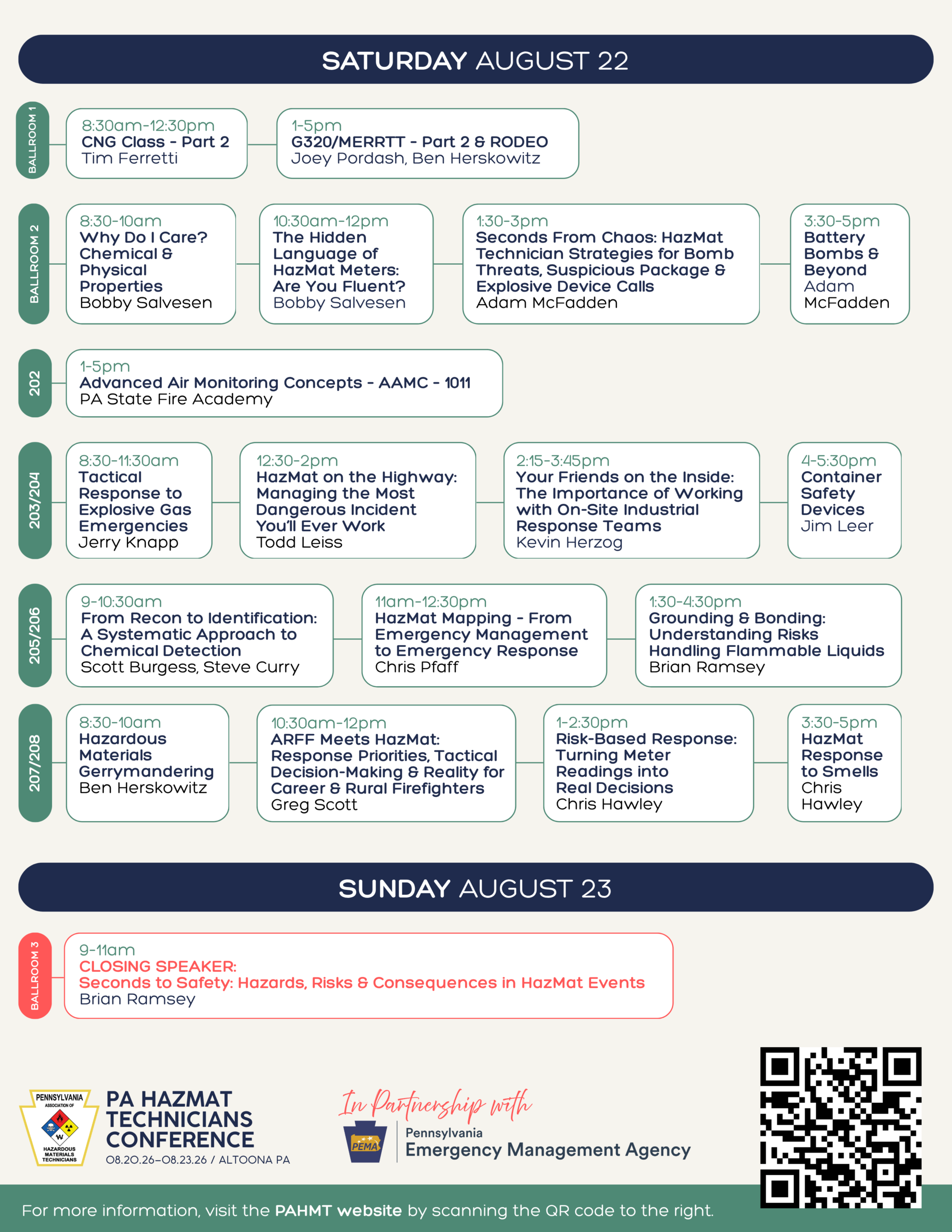
Saturday Classes
Select the class name below for dropdown showing more information including instructor/presenter name, location and in-depth class description.
CNG Class (Incident Scene Safety & Technical Considerations) – Part 2
Location: Ballroom 1
Time: 8:30am–12:30pm
Presenter: Tim Ferretti
Live fire demonstration, hands on familiarization and discussion on CNG vehicle response and tactics. The instructor will activate Thermal Pressure Relief devices to demonstrate their function, timing, and ability to be delayed by standard response tactics. A CNG flare will be used to allow students to become familiar with the physical characteristics and sound profile of CNG venting and flaring. A vehicle walk around and identification of components will also be conducted for familiarization followed by an open discussion of tactics.
G320/MERRTT – Part 2; RODEO
Location: Ballroom 1
Time: 1–5pm
Presenter: Joey Pordash, Ben Herskowitz
G320: The purpose of this course is to provide the coursework to help qualify participants to serve as a Radiological Officer (RO). This course meets the Operations Level Competency for first responders and hazardous materials teams who may encounter or be called to manage radiological incidents. This course addresses Nuclear Power Plant, Transportation, Nuclear Weapons, WMD and Hazardous Material hazards. Participants will be able to support planning, emergency response, recovery activities, evaluation, NIMS/ICS applicability and exercising a radiological protection system (RPS) in preparation for a radiological incident. This course will include Pennsylvania specific information and requirements. It provides participants with an understanding of the roles and responsibilities of the Radiological Officer including administrative, equipment, team and advisory responsibilities. The course describes the framework within which the radiological response team functions, and provides fundamental knowledge of radiation and its affects, while building on the participant’s previous training and experience and including the proper response and pre-recovery procedures for a radiological incident.
RODEO: This event will focus on radiological emergency response and support activities. Topics will include blocks of instruction on instrumentation, Introduction to RadResponder, The Job of the Radiological Officer, A Hands on Station, Instrumentation Refresher, Radiological Sources, and Scene Response focusing on Monitoring/Decon stations. Course will commence rain or shine.
Why Do I Care? Chemical & Physical Properties
Location: Ballroom 2
Time: 1–5pm
Presenter: Bobby Salvesen
Organization: The HazMat Guys
This session takes a fresh look at the chemical and physical properties that form the basis of all our operations. Moving beyond the basics, we’ll explore why these properties matter and how they provide tactical advantages. We’ll examine these concepts from multiple perspectives to better understand how they influence our ability to control incidents.
The Hidden Language of HazMat Meters: Are You Fluent?
Location: Ballroom 2
Time: 10:30am–12pm
Presenter: Bobby Salvesen
Organization: The HazMat Guys
Metering can be perplexing, but we excel at simplifying it. This 90-minute session will demystify metering technologies like electrochemical, catalytic bead, and photoionization detection. Attendees will leave with a comprehensive understanding of metering and its critical role in hazardous materials response. This presentation offers a concise overview of our full-day course.
Seconds From Chaos: HazMat Technician Strategies for Bomb Threats, Suspicious Packages & Explosive Device Calls
Location: Ballroom 2
Time: 1:30–3pm
Presenter: Adam McFadden
Organization: Firehouse Training
When every second counts, hazmat responders must be prepared to respond to bomb threats and suspicious packages that may involve CBRNE agents, mass casualties, or secondary devices. This session explores critical strategies and field-proven tactics for fire-based hazardous materials teams operating in coordination with local firefighters, law enforcement, EMS, and bomb squads.
Attendees will learn how to identify potential explosive threats, assess scene hazards, utilize hazardous material detection equipment, implement safe isolation zones and on-site risk assessments, and support unified command structures. Real-world case studies, joint task force practices, and technical rescue integration will be discussed, focusing on firefighter safety, interagency operations, and public protection in high-threat environments.
Battery Bombs & Beyond: HazMat Response to Lithium-Ion Battery Terrorism Threats
Location: Ballroom 2
Time: 3:30–5pm
Presenter: Adam McFadden
Organization: Firehouse Training
Lithium-ion batteries power our lives — and increasingly, they are being misused as tools of criminal and terrorist violence. This dynamic, and interactive scenario-based course examines how commercial battery technology is being weaponized across domestic and international contexts: from targeted attacks on vehicle dealerships and political targets, to malicious tampering with shared micro-mobility devices, to the use of crushed battery cells concealed in soft containers and ignited in urban environments, like improvised incendiary devices and molotov cocktails.
Attendees will study a range of case histories: U.S. incidents such as attacks on Tesla dealerships and the politically motivated Tesla fire bomb outside Trump Hotel in Las Vegas; international events including battery-related threats at European transit hubs; and large maritime container fires in Asia where shipments of lithium-ion cells played a central role.
We will also analyze emerging domestic patterns — for example, criminals crushing lithium-ion cells and concealing them in pillowcases or soft bags to create highly transportable incendiary packages, and deliberate tampering of e-bikes and scooters placed in high-foot-traffic areas, to create secondary hazards. These scenarios highlight real, evolving threats that blur the lines between routine fire response, criminal investigation, and counter-terrorism.
Throughout the course we emphasize fire department hazardous material operational safety, hazard recognition, lithium-ion battery suppression tactics and response, evidence preservation and cell containment, and multi-agency coordination.
We will lead interactive scenarios and case discussions that force hazmat teams to think through initial size-up, containment and suppression tactics, thermal runaway and cell containment strategies; public safety perimeter considerations, and the handoff to criminal fire investigators and CBRNE teams.
Advanced Air Monitoring Concepts – AAMC – 1011
Location: Classroom 202
Time: 1–5pm
Organization: PA State Fire Academy
This is the certification session for the Advanced Air Monitoring for First Responders
Tactical Response to Explosive Gas Emergencies
Location: Classroom 203/204
Time: 8:30–11:30am
Presenter: Jerry Knapp
Organization: Suburban Tactical, Inc.
The purpose of this program is to show attendees how to improve their response to explosive gas (natural gas and propane) emergencies. Natural gas and propane emergencies are common alarms for all fire departments across our nation. Our training and procedures are often weak so gas emergencies don’t get the respect they require until a response goes bad. This presentation provides a practical fact filled, reality based, state of the art program that covers what fire officers and firefighters need to know to effectively and safely respond to natural gas and propane emergencies.
HazMat on the Highway: Managing the Most Dangerous Incident You’ll Ever Work
Location: Classroom 203/204
Time: 12:30–2pm
Presenter: Todd Leiss
Hazardous materials incidents on roadways combine everything that can go wrong: live traffic, limited visibility, compressed space, public exposure, media pressure, and the ever-present risk of secondary crashes and struck-by incidents.
This 90-minute session focuses on why roadway HazMat incidents are among the most dangerous scenes responders will ever operate on — and how those risks can be better managed through smarter command decisions, positioning, and integration with Traffic Incident Management (TIM) principles.
Participants will use RealScene XR, an immersive extended reality platform built from real incident scenes, to walk through highway HazMat scenarios in a guided discussion and tabletop-style format. This allows attendees to visually analyze apparatus placement, work zones, traffic flow, and command decisions without real-world risk.
By blending real-world case studies, responder injury and fatality data, and interactive XR-based discussion, the session emphasizes a critical mindset shift: on the roadway, the environment itself is often the primary hazard — not just the material involved.
Your Friends on the Inside: The Importance of Working with On-Site Industrial Response Teams
Location: Classroom 203/204
Time: 2:15–3:45pm
Presenter: Kevin Herzog
Organization: McGard, LLC
This course is designed to prepare Hazardous Materials Teams to effectively integrate, coordinate, and operate alongside on-site industrial emergency response teams during hazardous materials incidents.
Industrial facilities often maintain trained response personnel with specialized knowledge of site processes, chemical inventories, fixed suppression systems, and facility hazards. Successful incident outcomes depend on seamless cooperation between municipal/public HazMat teams and these in-house responders. This course emphasizes the critical role of unified command, communication, pre-incident planning, and operational coordination to ensure safe and efficient mitigation.
Container Safety Devices
Location: Classroom 203/204
Time: 4–5:30pm
Presenter: Jim Leer
This program will cover the application, capabilities, and limitations of safety devices used on fixed and transportation containers. Emphasis is placed on excess flow valves, pressure relief devices, internal valves, emergency shutoffs, and additional container protection hardware.
This course provides Hazardous Materials Technicians with the knowledge and skills to identify, evaluate, and safely manage incidents involving safety devices on both fixed facility and transportation containers. Emphasis is placed on excess flow valves, pressure relief devices, internal valves, and additional container protection hardware found across bulk and non-bulk packaging in both settings.
From Recon to Identification: A Systematic Approach to Chemical Detection
Location: Classroom 205/206
Time: 9–10:30am
Presenter: Scott Burgess, Steve Curry
The presentation will discuss using a systematic approach to detect chemicals and make risk-based response decisions. How do you determine your actions? How do you determine PPE? Isolation distances? How bad is the situation? We will discuss the use of papers, multi-gas meters, FTIR, Raman, ion mobility spectroscopy, and high-pressure mass spectrometry. The audience will then be given various scenarios to process using the information that has been presented.
HazMat Mapping – From Emergency Management to Emergency Response
Location: Classroom 205/206
Time: 11am–12:30pm
Presenter: Chris Pfaff
Organization: HazMat & Rescue
In this presentation, Chris will go over mapping programs and basic GIS technology that can assist Hazmat responders in their response. With the new technologies out there, we need to flex this information to enhance our response. We will go over resources already available to responders, yet possibly unknown. We will go over the tenants of our known resources to include Tier II reports, commodity flow reports and others.
Grounding & Bonding: Understanding Risks Handling Flammable Liquids
Location: Classroom 205/206
Time: 1:30–4:30pm
Presenter: Brian Ramsey
In this class we will examine the common causes and risks associated with static electricity and how current imbalances contribute to potential static discharges. Minimum Ignition Energy (MIE) and their relationships to common flammable liquids will be discussed and demonstrated during the class. There is a hands on portion where we will go outside and build an actual grounding field and let folks see actual values for easy ground fields and managing static electricity.
Hazardous Materials Gerrymandering
Location: Classroom 207/208
Time: 8:30–10am
Presenter: Ben Herskowitz
Hazardous Materials Gerrymandering takes a critical look at how hazardous materials, hazmat incidents, and response expectations are defined—and redefined—across the United States. The “beauty” of standards is that there are so many to choose from, and those choices are often shaped by training models, available resources, funding priorities, jurisdictional boundaries, and politics. The result is a patchwork approach to CBRN preparedness and public protection that can vary dramatically from one community to the next. This session is a curated, interactive discussion with no right or wrong answers, challenging participants to examine which standards exist, which ones are applied, how they’re interpreted, and when they truly matter during real-world incidents.
ARFF Meets HazMat: Response Priorities, Tactical Decision-Making & Reality for Career & Rural Firefighters
Location: Classroom 207/208
Time: 10:30am–12pm
Presenter: Greg Scott
Organization: Summit Hazmat & Emergency Consulting
Aircraft incidents are not just fire problems—they are complex HazMat incidents involving fuel, composites, batteries, oxygen systems, and hazardous cargo. This session bridges the gap between Airport Rescue Firefighting (ARFF) and municipal HazMat response, focusing on what career and rural firefighters must realistically do in the first 10–30 minutes before specialized resources arrive.
Designed for career, combination, and volunteer departments, this presentation delivers practical response recommendations, tactical priorities, and decision-making frameworks for aircraft incidents occurring on-airport, off-airport, or in rural jurisdictions.
Risk-Based Response: Turning Meter Readings into Real Decisions
Location: Classroom 207/208
Time: 1–2:30pm
Presenter: Chris Hawley
Organization: Emergency Management Solutions
Have you ever wondered what vapor pressure really means—or more importantly, how it actually affects your PPE or isolation decisions?
In your HazMat Technician class, you probably wrote down the definitions. Maybe even talked through them. But when you’re on scene, staring at a meter and a leaking product, nobody hands you a definition sheet and says, “Take your time.”
This session is all about closing that gap.
We take vapor pressure and other key properties and connect them directly to what you’re seeing on your meters and what you’re deciding in real time. Using basic detection readings and a simple, risk-based decision process, you’ll learn how to quickly size up fire, corrosive, toxic, and radioactive hazards without overthinking it or guessing.
This isn’t theory—it’s about making calls. The kind that drives your PPE, your isolation distances, your tactics, and ultimately answering the question every responder is asking: how bad is it?
After a quick walkthrough of the process, we’ll put it to work with hands-on scenarios that force you to interpret data, trust the science, and make smart, defensible decisions under pressure.
If you’ve ever looked at your meter and thought, “Okay… now what?”—this class is for you.
HazMat Response to Smells
Location: Classroom 207/208
Time: 3:30–5pm
Presenter: Chris Hawley
Organization: Emergency Management Solutions
“It smells weird.”
That’s it. That’s the call.
No placard. No obvious spill. Just a building full of people looking at you like you’re supposed to magically know what’s going on.
HazMat teams deal with odor complaints all the time—and some of them make perfect sense. Others? Not so much. This session dives headfirst into the common odors, the unusual odors, and the ones that make you question whether you’re chasing a chemical problem or a ghost.
We’ll break down how to approach these calls without going down the rabbit hole, and more importantly, how to tell the difference between a true sick building and a legitimate chemical issue. One can usually be handled with a straightforward approach. The other can turn into a long, complex incident if you don’t recognize it early.
Using real-world examples, practical strategies, and case studies, you’ll learn how to sort through limited information, avoid the classic traps, and make smart, defensible decisions when the only clue you have is your nose—and maybe a confused gas meter.
Because sometimes it’s nothing… and sometimes it’s absolutely not.
If you’ve ever stood in a hallway thinking, “Why does it smell like garlic, cat pee, and regret?”—this session is for you.
Sunday Keynote
Select the class name below for dropdown showing more information including instructor/presenter name, location and in-depth class description.
Keynote Address – Seconds to Safety: Hazards, Risks, & Consequences in HazMat Events
Location: Ballroom 3
Time: 9–11am
Presenter: Brian Ramsey
This dynamic course empowers hazmat responders to recognize, analyze, and mitigate the hazards, risks, and potential consequences that emerge during high-stakes incidents. Through interactive scenarios and behavioral analysis, participants will explore how human factors shape the effectiveness of response efforts, influence safety outcomes, and impact critical decision-making.